Apr 16, 2026
08.28 / 2025
Women's Double Breasted Long Trench Coat | Chic & Elegant Styles
The Enduring Appeal and Technical Sophistication of the women's double breasted long trench coat
In the realm of B2B fashion and apparel procurement, the selection of iconic garments that blend timeless style with robust technical specifications is paramount. The women's double breasted long trench coat stands as a quintessential example, representing a confluence of historical design principles and contemporary material science. This article delves into the sophisticated engineering, material science, and strategic market positioning that define modern trench coats, offering critical insights for professional buyers, fashion directors, and procurement specialists.
Beyond its aesthetic appeal, a high-quality trench coat is a testament to precision manufacturing, durable fabric technology, and ergonomic design. Understanding these underlying elements is crucial for assessing product value, ensuring brand alignment, and meeting the discerning demands of the end-consumer market, whether for luxury retail, corporate uniform programs, or specialized apparel lines. We will explore its journey from concept to consumer, highlighting the meticulous processes and advanced features that distinguish superior products.
Current Industry Trends and Market Dynamics
The market for premium outerwear, especially the women's double breasted long trench coat, is continuously evolving, driven by consumer demand for sustainability, versatility, and advanced material performance. Recent trends indicate a strong pivot towards eco-friendly materials such as organic cotton twill, recycled polyester blends, and innovative bio-based fabrics. Brands are also integrating enhanced weather-resistant technologies without compromising breathability or tactile comfort.
- Sustainable Sourcing: A growing emphasis on Global Organic Textile Standard (GOTS) certified cotton or recycled synthetic fibers.
- Technical Fabric Innovation: Development of advanced water-repellent (DWR) finishes that are PFC-free, and membrane technologies that offer superior breathability and wind resistance.
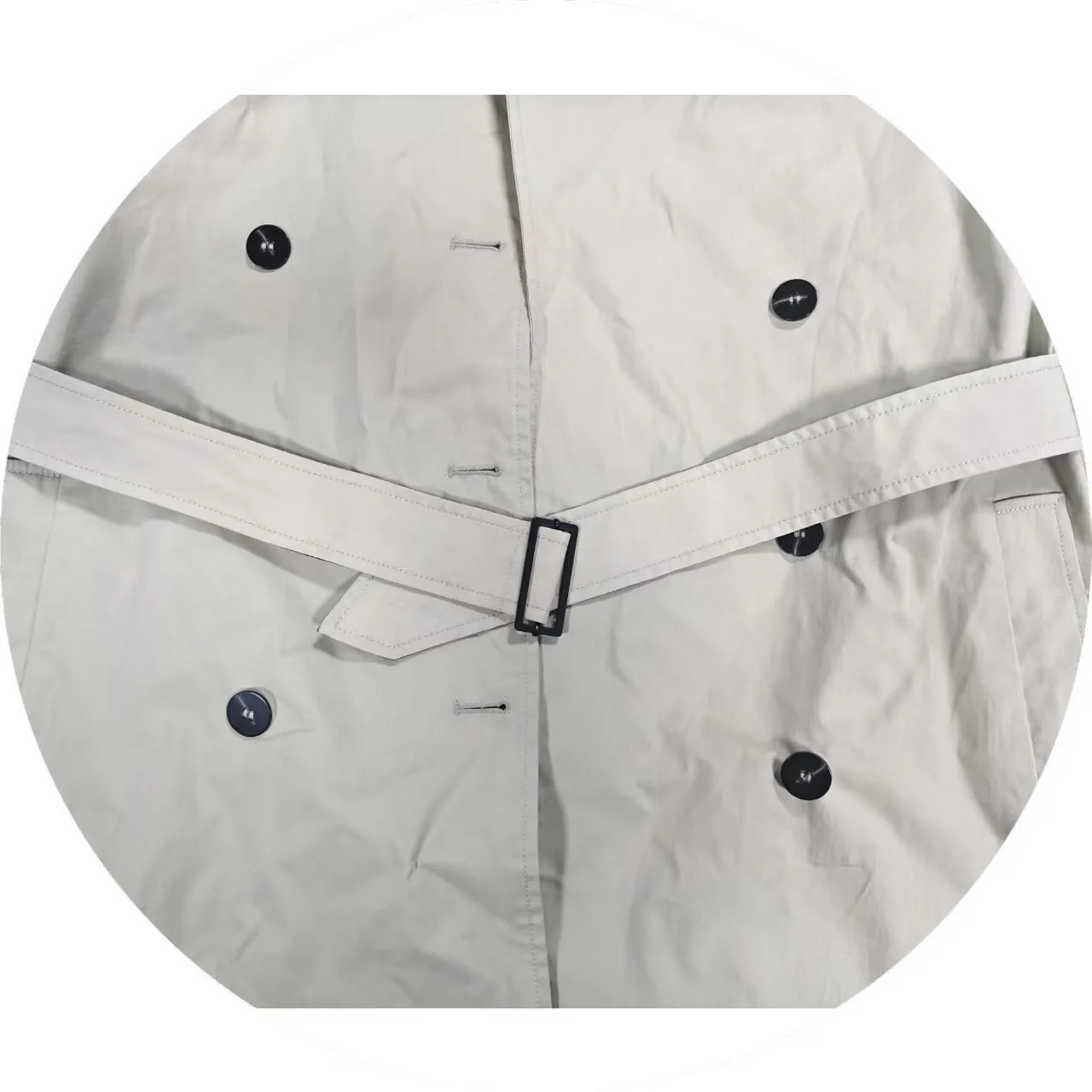
- Design Versatility: While classic silhouettes remain popular, there's a trend towards modular designs, detachable linings, and adjustable elements that enhance multi-seasonal utility. Color palettes are expanding beyond traditional beige to include sophisticated options like the black double breasted trench coat and the elegant white double breasted trench coat, catering to diverse aesthetic preferences.
- Digital Integration: Adoption of 3D design software for pattern making and virtual prototyping, streamlining the design-to-production cycle and reducing material waste.
- Ethical Production: Increased scrutiny on supply chain transparency, fair labor practices, and factory certifications (e.g., SA8000, BSCI).
The global trench coat market, while mature, sees consistent growth driven by its status as a foundational wardrobe piece. According to market research by Grand View Research, the global outerwear market size was valued at USD 74.4 billion in 2022 and is expected to grow at a compound annual growth rate (CAGR) of 4.3% from 2023 to 2030, with trench coats representing a significant segment within this category due to their timeless appeal and functional utility.
Technical Specifications and Material Engineering
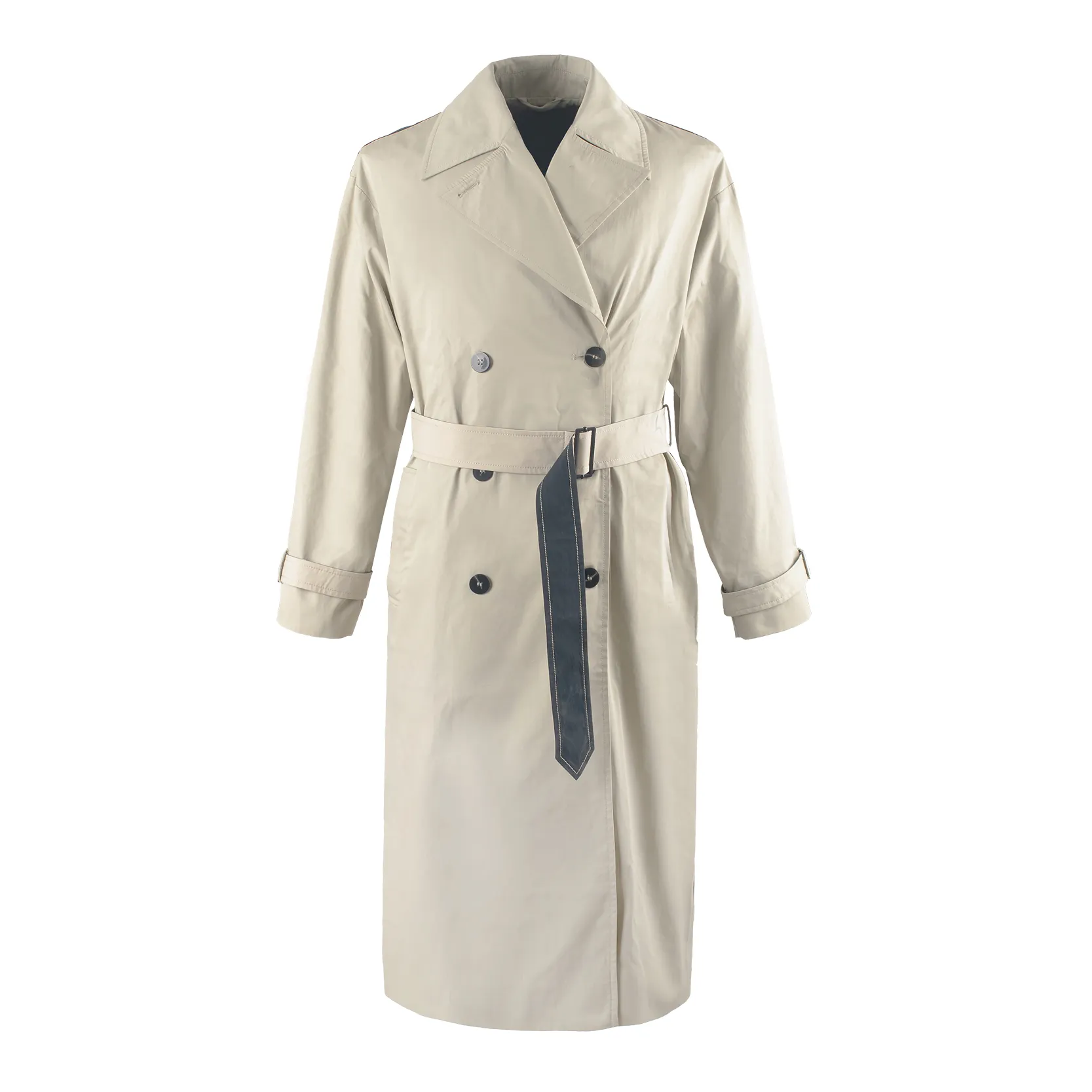
The core of a high-performance women's double breasted long trench coat lies in its meticulously chosen materials and precise engineering. Fabric selection is critical, balancing aesthetic drape with functional resilience. Typical high-quality trench coats utilize densely woven twill fabrics, often cotton gabardine, known for its tight weave that naturally resists water and maintains shape.
Key Components and Features:
- Outer Shell Fabric: Often 100% long-staple cotton gabardine (e.g., Ventile®), or a cotton-polyester blend for enhanced durability and wrinkle resistance. Water repellency typically achieved via durable water repellent (DWR) finish, meeting AATCC Test Method 22 standards with a spray rating of 80 or higher.
- Lining: High-quality viscose or cupro for smooth drape and breathability, or a quilted thinsulate lining for insulation in colder climates.
- Interlining: Fusible interlinings in collars, lapels, and cuffs provide structural integrity and a crisp finish, typically a woven or non-woven polyester blend with specific weight (e.g., 80-120 gsm).
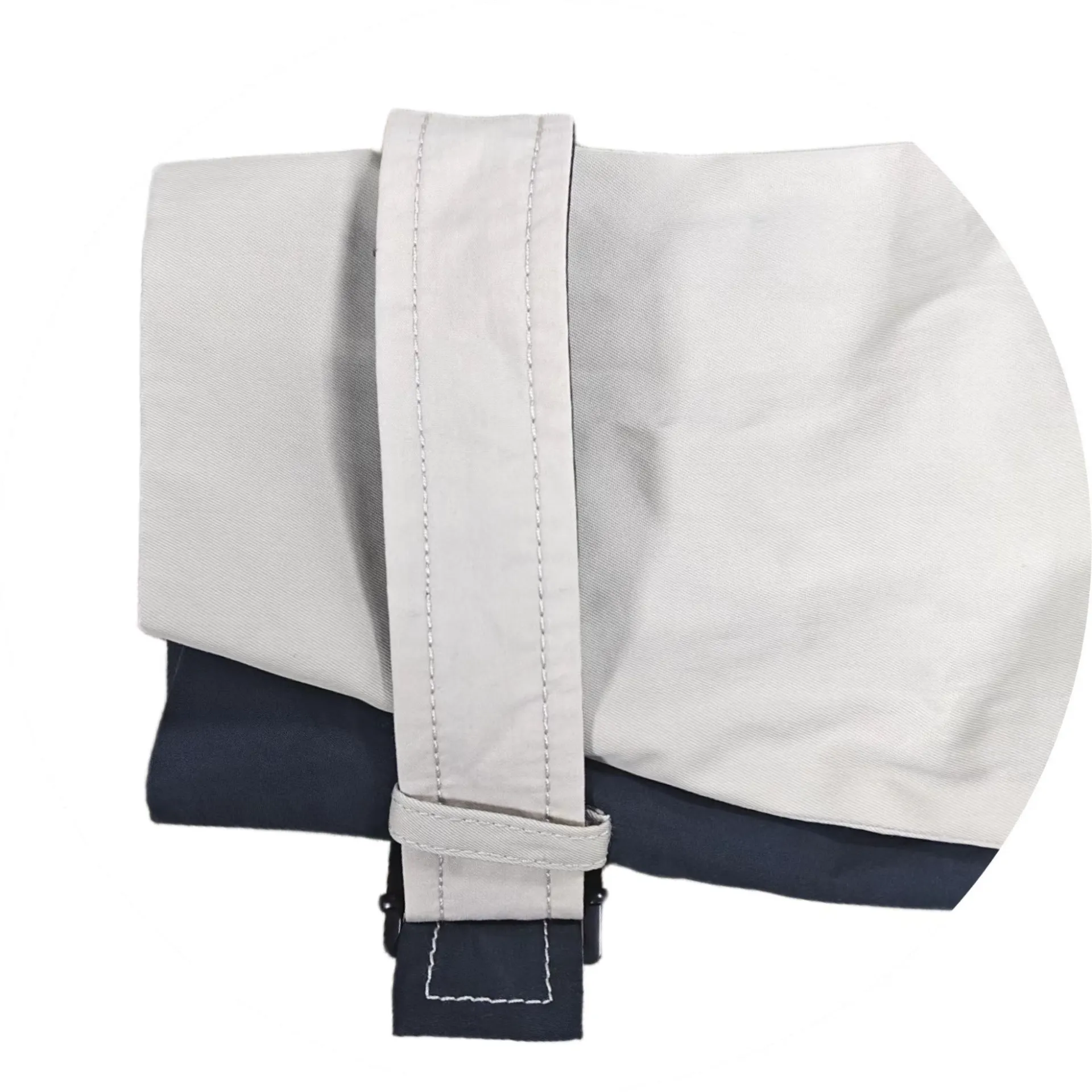
- Hardware: Real horn buttons, corrosive-resistant metal buckles for belt and cuff straps, reinforced with robust stitching (e.g., 10-12 stitches per inch) for longevity.
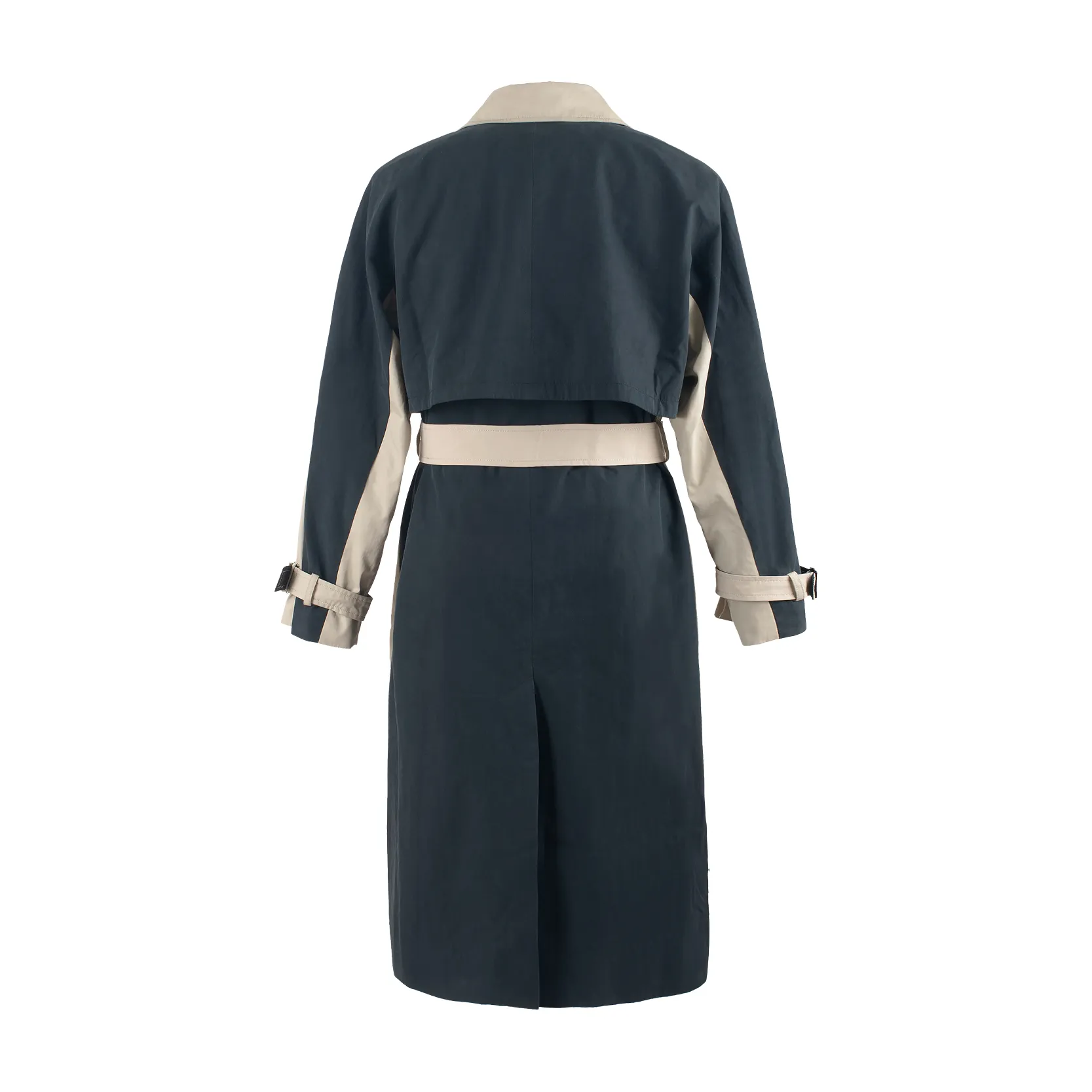
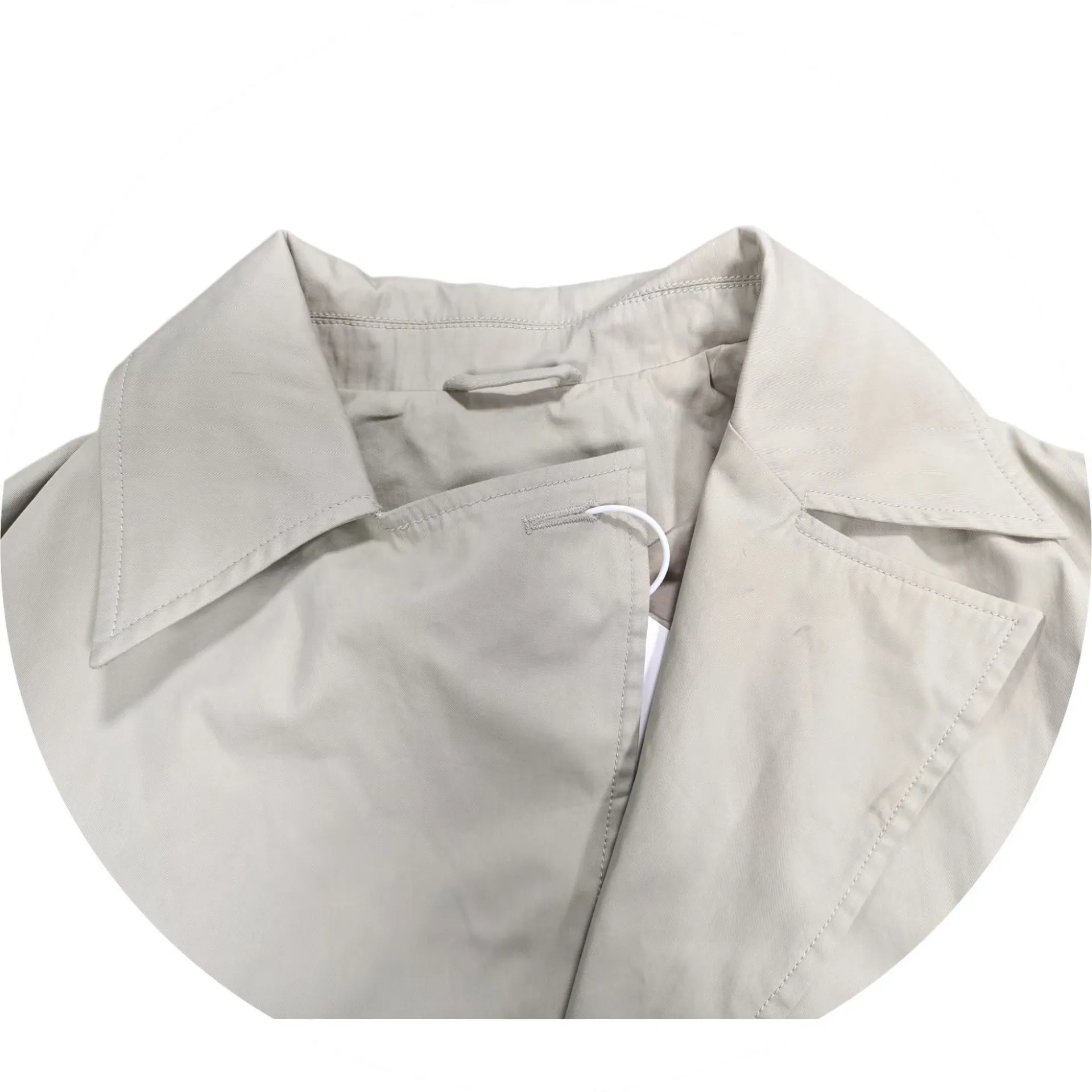
- Construction: Features include a storm flap (gun flap), often on the right shoulder, designed to shed rain; shoulder epaulets for military heritage; a deep back yoke (storm shield) for enhanced water shedding; and a robust throat latch. All critical seams are often felled or bound for durability and a clean interior finish, ensuring the garment withstands repeated wear and cleaning cycles.
Product Specification Table: Women's Double-Breasted Long Trench Coat
| Parameter | Specification | Standard/Method |
|---|---|---|
| Outer Shell Fabric | 100% Cotton Gabardine (280-320 GSM), or 65% Cotton / 35% Recycled Polyester Twill | OEKO-TEX Standard 100 Class II |
| Water Repellency | PFC-free DWR finish, Spray Rating ≥ 80 | AATCC Test Method 22 |
| Breathability | 5,000 - 8,000 g/m²/24hrs (for technical blends) | ASTM E96/E96M |
| Lining Fabric | 100% Viscose or Cupro Twill (70-90 GSM) | ISO 105 B02 (Colorfastness) |
| Button Material | Genuine Horn or High-Density Recycled Resin | EN ISO 13935-1 (Seam Strength) |
| Stitching Density | 10-12 stitches per inch (SPI) | Internal QC Standard |
| Seam Strength | Minimum 300N | ASTM D1683 / D1683M |
| Abrasion Resistance | >20,000 Martindale cycles | EN ISO 12947-2 |
Manufacturing Process Flow
The production of a high-quality double breasted trench coat black involves a series of meticulously controlled stages, ensuring consistency, precision, and adherence to design specifications. This process integrates traditional tailoring expertise with modern manufacturing technologies.
1. Design & Pattern Development
Initial conceptualization and technical design. Use of CAD software (e.g., Lectra, Optitex) for digital pattern making, grading, and marker efficiency. Prototyping and fit testing to perfect silhouette and ergonomic movement.
2. Material Sourcing & Inspection
Procurement of certified fabrics (e.g., GOTS organic cotton, recycled synthetics) and components (buttons, buckles). Incoming inspection for color consistency, fabric defects, and adherence to specified weight and weave density. Fabrics may undergo pre-shrinking or specialized finishing.
3. Cutting & Bundling
Automated fabric spreading and precision cutting using CNC-controlled cutters for optimal material utilization and accuracy. Cut pieces are then sorted and bundled according to size and component, ready for assembly.
4. Assembly & Stitching
Garment assembly on specialized industrial sewing machines. Key stages include fusing interlinings, constructing body panels, attaching sleeves, collars, and pockets. Critical seams (e.g., armholes, side seams) are reinforced or finished with felled seams for durability. Operators are trained in specific stitch types and tension control.
5. Finishing & Hardware Attachment
Attachment of buttons, buckles, and other hardware. Buttonholes are created with automated buttonhole machines. Any DWR treatments or specialized coatings are applied at this stage if not done during fabric production. Garments undergo initial steaming.
6. Quality Control & Final Inspection
Multi-stage quality checks: in-process inspection at each sewing station, mid-process audits, and a final comprehensive inspection. Checks include measurements against specifications, seam integrity, defect identification, hardware function, and overall aesthetic. Adherence to ISO 9001 standards for quality management is critical.
7. Pressing, Packaging & Distribution
Final pressing and shaping on specialized pressing equipment to achieve a pristine finish. Garments are then carefully folded, bagged, and boxed, often with desiccant packs to prevent moisture damage during transit. Ready for global distribution.
Application Scenarios and Strategic Utility
The strategic utility of the double breasted black trench coat extends across various high-value application scenarios, making it a versatile asset for diverse B2B clients, from luxury retailers to corporate uniform providers.
- Luxury and Premium Retail: High-end department stores and boutique retailers stock trench coats as core offerings due to their enduring style and investment-piece status. The versatility of a `black double breasted trench coat` or a classic khaki makes it a reliable seller for discerning clientele.
- Corporate and Executive Wear: For companies aiming to project a sophisticated and unified image, trench coats serve as ideal outerwear for executive teams, sales professionals, or client-facing roles. Customizable options with subtle branding elevate corporate identity while providing practical protection.
- Travel and Lifestyle Brands: Given its functional design and ability to adapt to varying climates, trench coats are favored by travel-oriented brands. Features like wrinkle resistance, light insulation, and compactibility are highly valued.
- Fashion Rentals and Subscription Services: The durability and timelessness of a quality trench coat make it an excellent choice for fashion rental platforms, ensuring longevity and consistent appeal across multiple users.
- Film, Television, and Theatrical Productions: Trench coats are frequently used in costume design for their classic silhouette and ability to convey character, especially for roles requiring a sophisticated or mysterious aura.
In a typical application scenario, a corporate client might procure custom-branded women's double breasted long trench coat units for their sales force. The coat’s ability to transition seamlessly from a client meeting in a metropolitan setting to travel between cities, all while maintaining a professional appearance and offering protection from unpredictable weather, underscores its practical advantages. Its inherent resistance to creasing (especially with modern fabric blends) ensures a polished look throughout the day, enhancing brand perception and employee comfort.
Technical Advantages and Performance Metrics
The technical superiority of a well-engineered women's double breasted long trench coat translates directly into enhanced durability, functionality, and user satisfaction. These advantages are rooted in advanced fabric technology and thoughtful garment construction.
- Superior Weather Protection: Densely woven gabardine fabrics, often treated with a durable water repellent (DWR) finish, offer excellent resistance to rain and wind. This protects the wearer from environmental elements while maintaining breathability, preventing overheating. Performance metrics include hydrostatic head ratings (e.g., 5,000mm+ for significant water resistance) and air permeability (e.g.,
- Enhanced Durability and Service Life: Reinforced stitching (e.g., lockstitch at critical points, chainstitch for strength), robust hardware (metal buckles, securely sewn buttons), and abrasion-resistant fabrics contribute to a significantly longer service life compared to standard coats. Quality trench coats can often withstand 50+ dry cleaning cycles without significant degradation of fabric or structure, exceeding typical garment lifespans.
- Thermal Regulation: While not an insulated winter coat, a well-lined trench coat, especially with options for removable thermal liners (e.g., Thinsulate™ or recycled down alternatives), provides adaptable thermal comfort across varying temperatures, expanding its seasonal utility.
- Wrinkle Resistance: Modern fabric blends and finishes are designed to minimize creasing, ensuring the coat retains a crisp, professional appearance even after prolonged wear or travel, which is a key advantage for business professionals.
- Ergonomic Design: Thoughtful pattern cutting allows for a full range of motion without restricting the wearer, crucial for active professionals. Adjustable cuffs, belts, and collars provide a customizable fit for comfort and weather protection.
These technical advantages ensure that the investment in a premium women's double breasted long trench coat yields long-term value, reducing replacement costs and enhancing the wearer’s comfort and professional presentation.
Vendor Comparison for B2B Procurement
Selecting the right manufacturing partner for a women's double breasted long trench coat is a critical decision for B2B buyers. Key factors include production capacity, quality control, ethical sourcing, customization capabilities, and lead times. Below is a comparison of hypothetical vendor profiles to illustrate key differentiators.
Vendor Comparison Table: Trench Coat Manufacturers
| Feature | Vendor A (Premium Niche) | Vendor B (Mid-Market Volume) | Vendor C (Sustainable Focus) |
|---|---|---|---|
| Material Quality & Sourcing | Exclusively Ventile®, fine wools, bespoke hardware. GOTS & OEKO-TEX optional. | Standard cotton twill, poly-blends. OEKO-TEX certified materials standard. | GOTS organic cotton, recycled polyester, innovative bio-based fabrics. Full traceability. |
| Craftsmanship & Finishes | Hand-finished details, fully felled seams, precise tailoring. | Standard industrial sewing, overlock seams. Good quality control. | High standard, focus on durability, seam sealing for weather protection. |
| Certifications | ISO 9001, limited sustainability certs. | ISO 9001, BSCI, SEDEX. | GOTS, SA8000, OEKO-TEX, RWS (Responsible Wool Standard). |
| Customization Options | Extensive, bespoke design, private label, unique material blends. | Standard modifications (color, branding, minor design tweaks). | Sustainable material swaps, eco-friendly branding, design for longevity. |
| Minimum Order Quantity (MOQ) | 50-100 units | 500-1000 units | 200-500 units |
| Typical Lead Time (Sample) | 4-6 weeks | 2-3 weeks | 3-5 weeks |
| Typical Lead Time (Production) | 12-16 weeks | 8-10 weeks | 10-14 weeks |
Buyers must align their specific needs (e.g., volume, sustainability goals, budget, level of customization) with the capabilities and strengths of potential vendors. Thorough due diligence, including factory audits and sample evaluations, is essential.
Customized Solutions for B2B Clients
For B2B partners, the ability to offer customized solutions for the women's double breasted long trench coat is a significant value proposition. Customization can range from minor branding adjustments to complete bespoke design and material selection, allowing clients to differentiate their offerings and perfectly match their brand identity or functional requirements.
- Material Personalization: Clients can specify unique outer shell fabrics (e.g., specific cotton weight, recycled content percentage, performance characteristics like advanced DWR or waterproof-breathable membranes), lining materials (e.g., custom prints, sustainable viscose, or even cashmere blends for luxury), and hardware (e.g., engraved buttons, custom-designed buckles).
- Color and Pattern Development: Beyond standard colorways like the black double breasted trench coat or classic beige, custom dye-to-match services or unique woven patterns can be developed to align with seasonal collections or corporate branding.
- Design Modifications: This includes altering the length, fit (e.g., oversized, slim-fit), lapel style, pocket configuration, belt design, or adding functional elements such as concealed inner pockets, detachable hoods, or interchangeable linings for multi-season wear.
- Branding Integration: Private label manufacturing, custom woven labels, embroidered logos, or branded swing tags. For corporate clients, subtle branding on buttons or inner lining can reinforce company identity.
- Sizing and Fit Systems: Development of extended size ranges, petite or tall options, or gender-neutral sizing to cater to a broader demographic, often involving detailed fit sessions and pattern adjustments.
- Packaging and Presentation: Bespoke packaging solutions, including garment bags, custom hangers, or branded boxes, enhance the unboxing experience and align with luxury brand standards.
These customized solutions enable B2B partners to create unique, market-specific products that resonate strongly with their target audience, thereby securing a competitive edge.
Application Case Studies & Customer Experience
Real-world applications highlight the tangible benefits of procuring high-quality women's double breasted long trench coat units. These case studies underscore how technical excellence translates into market success and customer satisfaction.
Case Study 1: Luxury Retailer's Signature Collection
A prominent European luxury fashion house partnered with a specialized manufacturer to develop a signature line of double breasted black trench coats. The client required exceptional material quality, including ethically sourced organic cotton gabardine and real horn buttons, alongside meticulous hand-finishing. The manufacturer's adherence to ISO 9001 quality management and GOTS certification for materials ensured both product integrity and ethical compliance. The resulting collection, launched at a premium price point, received critical acclaim for its timeless design, durability, and luxurious feel, selling out key sizes within weeks of release and significantly boosting the brand's outerwear category.
Case Study 2: Corporate Uniform Program for Global Consulting Firm
A global consulting firm sought a sophisticated yet practical outerwear solution for its female executives. They opted for a customized women's double breasted long trench coat with a subtly embroidered logo and a specialized wrinkle-resistant, water-repellent finish. The primary criteria were professional appearance, comfort during frequent travel, and ease of care. The chosen manufacturer provided extensive prototyping and material testing to meet the firm's strict performance standards (e.g., colorfastness, abrasion resistance). Feedback from employees highlighted the coat's comfort, elegant drape, and its ability to maintain a polished look throughout long workdays and international travel, contributing positively to the firm's professional image.
Case Study 3: Sustainable Fashion E-commerce Brand
An emerging e-commerce brand specializing in sustainable apparel needed a high-quality, eco-friendly trench coat. They chose a manufacturer known for their robust sustainable sourcing (recycled polyester blend outer, recycled content lining) and transparent supply chain. The brand emphasized the trench coat's eco-credentials in their marketing, showcasing its OEKO-TEX Standard 100 certification and PFC-free DWR. The product quickly became a bestseller, appealing to environmentally conscious consumers who valued both style and sustainability. Customer reviews frequently praised the coat's quality, durability, and alignment with their values, confirming the market demand for ethically produced outerwear.
Ensuring Trustworthiness ()
Frequently Asked Questions (FAQ)
Q: What is the typical lead time for a custom order of the women's double breasted long trench coat?
A: Sample lead times typically range from 3-6 weeks, depending on complexity and material availability. Production lead times for bulk orders (e.g., 500 units) are generally 10-14 weeks from final sample approval and deposit, subject to current production schedule and order volume.
Q: What quality certifications do your manufacturing partners hold?
A: Our partners typically hold ISO 9001 for quality management systems, and depending on the client's requirements, may also have GOTS (Global Organic Textile Standard), OEKO-TEX Standard 100, BSCI, or SA8000 certifications for ethical and sustainable production practices.
Q: How do you ensure consistency in bulk orders?
A: We implement a rigorous multi-stage quality control process, including incoming material inspection, in-process checks at each production stage, mid-line audits, and a final comprehensive inspection before packaging. This is further supported by adherence to AQL (Acceptable Quality Level) standards (typically 2.5 for major defects, 4.0 for minor defects).
Lead Time & Fulfillment Details
We provide transparent lead times, typically broken down into sample development (3-6 weeks) and bulk production (10-14 weeks, depending on order size and customization). Our fulfillment process is managed by dedicated account managers, who provide regular updates and ensure timely delivery. We work with established logistics partners for global shipping, offering various options from air freight for urgent orders to sea freight for cost-effectiveness.
Warranty Commitments
Our premium trench coats come with a standard 12-month warranty against manufacturing defects in materials and workmanship, from the date of receipt. This warranty covers issues such as faulty stitching, hardware malfunction, or fabric flaws under normal use. Specific details are outlined in our B2B service agreement, ensuring peace of mind for our partners.
Customer Support Information
Our dedicated B2B customer support team is available to assist with all inquiries, from initial consultations and technical specifications to order tracking and after-sales service. We offer multi-channel support via email, phone, and a dedicated client portal, ensuring prompt and expert assistance. Our commitment extends beyond delivery, fostering long-term partnerships through reliable service and support.
Conclusion
The women's double breasted long trench coat transcends seasonal trends to remain a pillar of sophisticated outerwear. Its intricate construction, reliance on advanced textile engineering, and adaptability to diverse functional and aesthetic requirements make it an indispensable garment for discerning B2B procurement. By focusing on certified materials, precise manufacturing processes, comprehensive quality control, and robust customer support, manufacturers ensure that each trench coat delivered represents the pinnacle of craftsmanship and enduring value. For businesses seeking to enhance their brand's appeal with a product that merges heritage with high-performance, the strategically procured trench coat offers an unparalleled advantage.
Authoritative References
- Grand View Research. (2023). Outerwear Market Size, Share & Trends Analysis Report By Product, By Distribution Channel, By Region, And Segment Forecasts, 2023 - 2030.
- American Association of Textile Chemists and Colorists (AATCC). (Ongoing). AATCC Test Methods for Textile Materials.
- ASTM International. (Ongoing). Standards for Textiles.
- International Organization for Standardization (ISO). (Ongoing). ISO 9001 Quality Management Systems.
- OEKO-TEX Association. (Ongoing). OEKO-TEX Standard 100 Certification.