Finding a balance between budget constraints and equipment durability is a recurring challenge for facility managers and procurement officers. When sourcing protective clothing, the search for cheap work trousers often leads to a critical trade-off between initial cost and the long-term replacement cycle.
The industrial apparel market has shifted toward functional efficiency, where "cheap" no longer implies low quality, but rather optimized production and material selection. Modern manufacturing techniques allow for the creation of durable gear that maintains a low price point without sacrificing the safety or comfort of the wearer.
This analysis examines how to evaluate cost-effective workwear, the technical factors that influence longevity, and the strategic ways to source high-value trousers for industrial environments.


The concept of "cheap" in the context of work trousers is evolving from a focus on the lowest unit price to a focus on the lowest "cost-per-wear." In large-scale operations, a trouser that costs 20% less but lasts 50% shorter is effectively more expensive.
Companies like Shijiazhuang Yihan Clothing Co., Ltd. leverage over 15 years of production experience to optimize this balance. By integrating streamlined manufacturing with BSCI and OEKO-TEX certifications, they provide options that meet safety standards while remaining accessible for bulk procurement.
The choice of fabric is the primary determinant of both price and performance. While 100% cotton provides breathability, synthetic blends—such as polyester-cotton mixes—often offer superior tensile strength and resistance to abrasion. This makes them a more sustainable choice for high-friction environments.
Advanced polyester fibers are specifically engineered for tensile resistance and easy maintenance. For instance, garments utilizing high-grade polyester remain machine-washable without losing shape or color, reducing the frequency of replacement and thereby lowering the total cost of ownership.
Furthermore, the integration of sustainable fabrics is becoming a market requirement. Balancing environmental protection with durability allows manufacturers to produce cost-effective lines that align with global "green" business philosophies without compromising the protective qualities of the workwear.
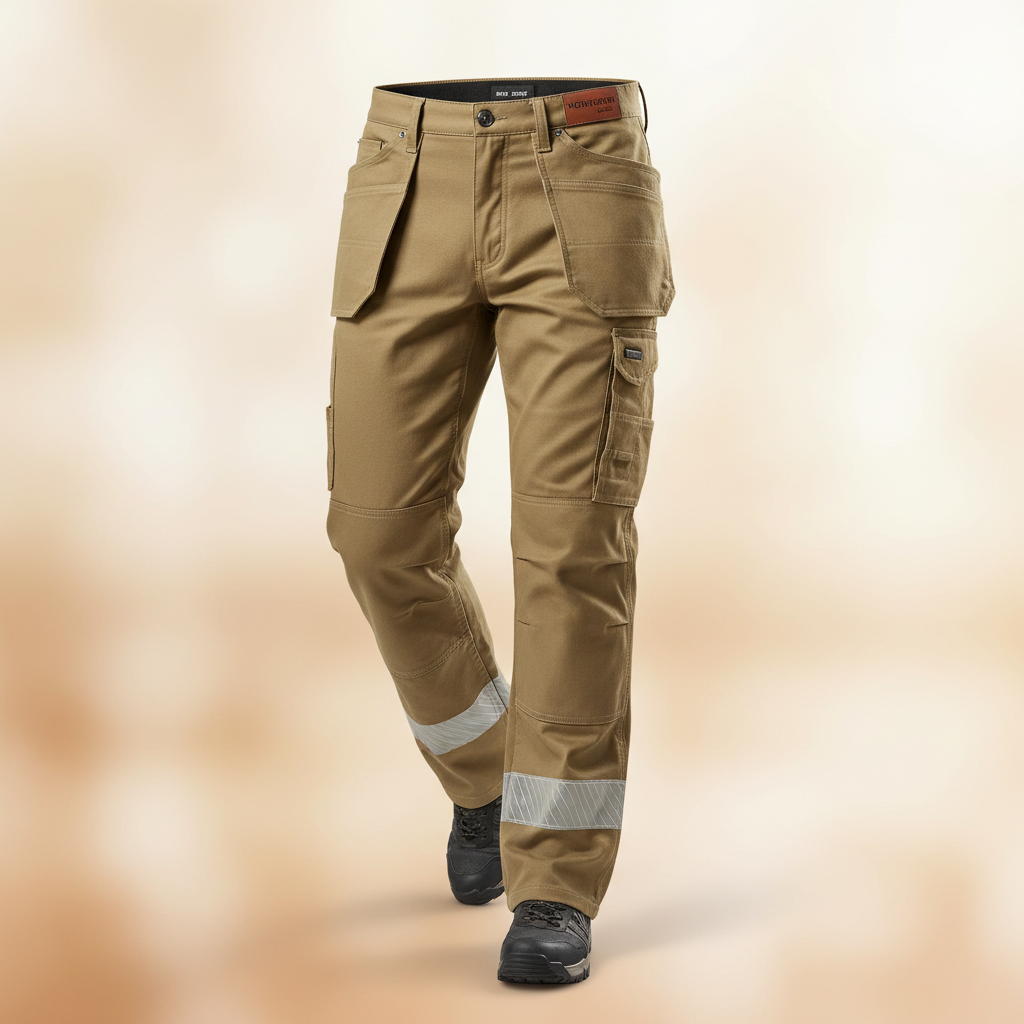
Beyond the fabric, the structural integrity of the trousers determines their lifespan. This includes the quality of the stitching, the reinforcement of high-stress areas like the knees and pockets, and the flexibility of the waistband.
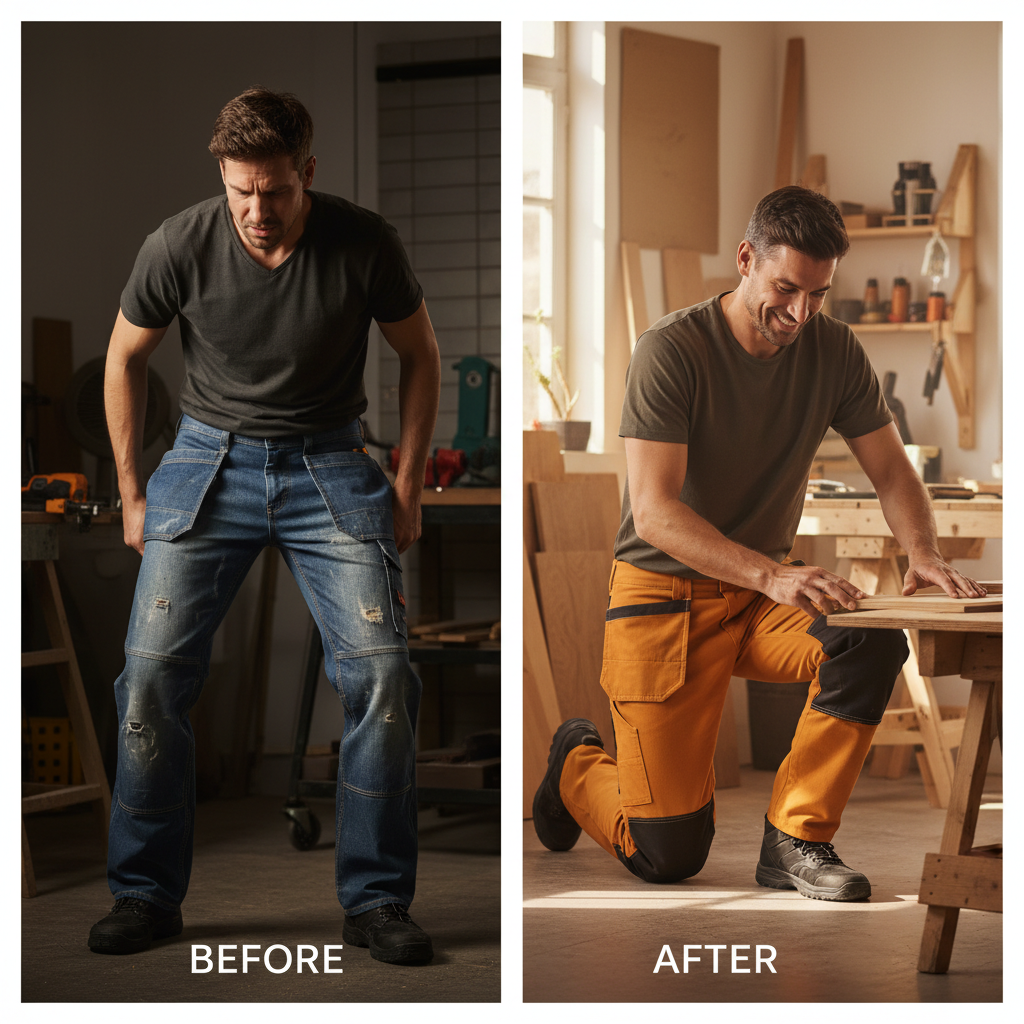
True value in workwear is achieved when ergonomic design meets industrial-grade reinforcement, ensuring the garment adapts to the worker's movement while resisting mechanical failure.
A well-designed trouser incorporates a non-restrictive fit that allows for free movement, which ironically extends the life of the garment by reducing the tension placed on seams during activity. This design logic is essential for maintaining a high-standard workforce environment.
Evaluating different fabrications requires a standardized index to understand where budget cuts impact performance. Factors such as abrasion resistance, moisture wicking, and color fastness are measured against the unit price to determine the relative value.
The following data illustrates a conceptual relative assessment of common materials used in budget-friendly work trousers, highlighting the trade-off between initial cost and long-term durability.
The suitability of low-cost work trousers varies significantly across different industrial settings. In a light-duty warehouse environment, a standard polyester blend is often sufficient. However, in heavy manufacturing or construction, "cheap" trousers must be supplemented with reinforced knee pads or high-denier fabric to avoid premature failure.
When a manufacturer evaluates their PPE (Personal Protective Equipment) budget, they must map the garment type to the specific physical demands of the role. Using a lightweight budget option for a high-impact role leads to higher turnover and increased expenditure over a fiscal year.
The move toward OEM and ODM (Original Equipment/Design Manufacturer) services has allowed companies to bypass middlemen, effectively lowering the cost of high-quality workwear. By working directly with factories that possess internal production plants, buyers can customize fabric selection and style to their specific needs.
This direct-to-factory model reduces supply chain links, which is the most effective way to secure cheap work trousers that do not compromise on quality. It enables the implementation of strict quality inspection systems at the source.
Moreover, the ability to adjust production flexibly means that enterprises can scale their orders based on seasonal demand, further optimizing their operational budgets and reducing waste.
Selecting the right budget workwear requires a systematic approach. Buyers should not look for the lowest price, but for the highest specification within their price bracket. This involves comparing GSM (Grams per Square Meter) of the fabric and the type of stitching used.
The trade-off usually lies between breathability and durability. Heavy-duty canvas is durable but stiff; polyester blends are flexible and resistant to wrinkles but may be less breathable in extreme heat.
The following table provides a decision framework for matching budget work trousers to specific industrial requirements.
| Environment | Primary Need | Recommended Fabric | Durability Rating |
|---|---|---|---|
| Logistics/Warehousing | Mobility & Comfort | Poly-Cotton Blend | Medium |
| Heavy Manufacturing | Abrasion Resistance | Reinforced Canvas | High |
| Light Assembly | Breathability | Standard Cotton | Low-Medium |
| Outdoor Maintenance | Weather Resistance | Nylon-Poly Blend | High |
| Automotive Repair | Oil/Stain Resistance | Treated Polyester | Medium-High |
| General Utility | Cost-per-unit | Standard Work-blend | Medium |
Value is determined by the "cost-per-wear" ratio. Check the fabric GSM and the reinforcement at stress points like the crotch and knees. A low-cost garment that uses reinforced double-stitching and a durable poly-cotton blend will typically offer better long-term value than a cheaper, single-stitched cotton alternative that tears quickly.
Poly-cotton blends are generally the best for budget-conscious durability. Polyester provides the tensile strength and color retention, while cotton provides the necessary comfort and breathability. For extreme abrasion, a heavy-duty canvas or nylon blend is preferred, though these may be slightly more expensive.
Not necessarily. Many professional suppliers, including those with BSCI and OEKO-TEX certifications, utilize optimized production scales to lower costs. The key is to verify the supplier's certifications rather than assuming price is a proxy for safety or ethical standards.
Replacement frequency can be reduced by matching the specific trouser weight to the job role. Additionally, choosing polyester-rich blends helps maintain shape and resist shrinkage during industrial laundering, extending the usable life of the garment significantly compared to pure cotton.
OEM sourcing allows you to remove retail markups and specify the exact materials you need. By working directly with the manufacturer, you can ensure the trousers are built for your specific environment (e.g., adding extra pockets or reinforced panels) while keeping the cost low through bulk production.
It depends on the fabric. Standard budget blends are excellent for indoor or temperate climates. For extreme cold or wet environments, you should look for budget options with specific coatings or heavier weights. Always check the fabric composition to ensure it meets the thermal or moisture requirements of the site.
Achieving a cost-effective procurement strategy for industrial clothing requires a shift from searching for the lowest price to identifying the highest relative value. By prioritizing material science—specifically the use of durable polyester blends—and structural reinforcement, companies can maintain a professional and safe workforce without inflating their operational budgets.
As the industry moves toward more sustainable and transparent supply chains, the ability to source directly from certified manufacturers remains the most effective way to secure high-quality, affordable workwear that stands up to the rigors of daily industrial labor.